Orphan Organ: Shady Lady’s Meter-Pay Horror Cabinet Where Every Colour Owns a Savings Account
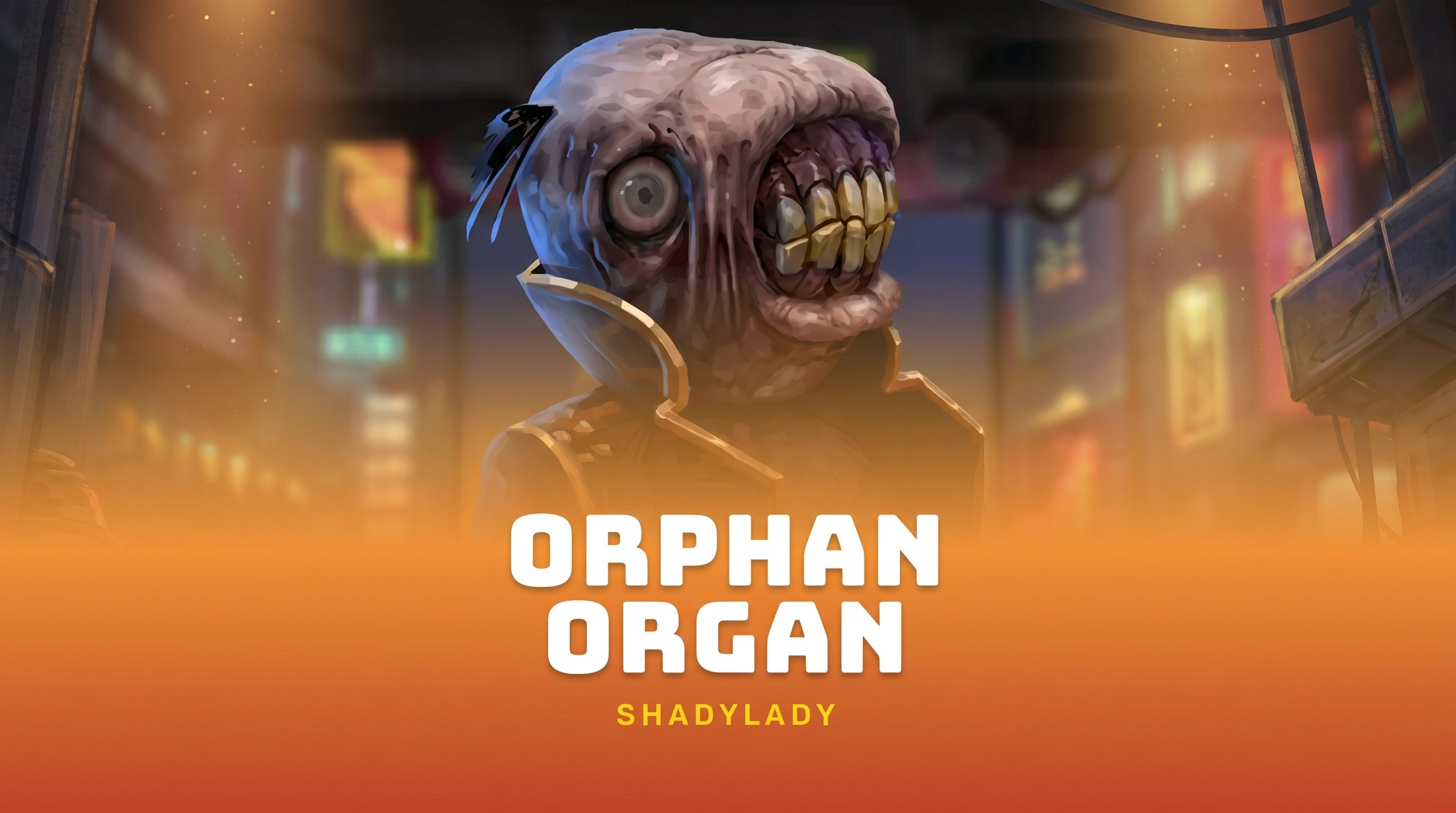
Orphan Organ: Shady Lady’s Meter-Pay Horror Cabinet Where Every Colour Owns a Savings Account
Orphan Organ is Shady Lady at full cosmic organ volume: a five-by-four grid that refuses traditional paylines in favour of per-symbol meters, cascades, and airlock surprises that feel less like “features” and more like the ship arguing with you. If you speak Sweet Bonanza scatter-pay fluency, you will recognise the collection itch — except here each colour banks progress toward its own payout contract until the board explodes or the bonus finally gives the meters room to breathe.
If you already chase book DNA on Book of Dead or neon punishment on Hacksaw Gaming Wanted Dead or a Wild 2, Orphan Organ is the middleweight weird — not because the skin is calm, but because MonkeyTilt’s meter reads 3/5 while the feature stack still behaves like midnight science fiction.
MonkeyTilt’s on-game sticker for this build reads 96.2% RTP, a 3.80% house edge, and volatility of 3/5. Bonus buys, super buys, and ante-style boosts (where legal) often print separate RTP lines in help — this article mirrors the default base configuration shown in your client.
Meter pay — eight is a door, cascades are the hallway
Public reviews describe meter pay as symbol-type collection: enough matching tiles of a given premium colour fill that colour’s meter until it pays a fixed prize ladder value, then clears in a cascade while extras can carry into the next drop depending on rules in your paytable. Wilds and airlock awards can top up multiple meters at once — the point is parallel progress, not a single “win line” fantasy.
Spend your first demo session answering four boring questions from help: minimum collection per meter tier, whether overflow persists across cascades, how meter multipliers and levels upgrade, and whether linked meters pay together when Harmony-style hooks attach. If you cannot answer those four, you do not yet understand what you are buying with your bet step.
Airlocks — the slot’s temper tantrum in a good suit
Airlock triggers in public copy fire from marked grid positions and can spit outcomes like multiplier bumps, level spikes, wild injections, or meter-linking chaos — exact menus belong in help, not in a blog paraphrase. Treat airlocks like Gates of Olympus hand-of-god events except dirtier and more local: they change board state faster than your turbo finger can narrate.
Live in Concert — free spins where meters stop pretending to reset
Three scatters in public documentation trigger Live in Concert with eight free spins, with a special scatter flavour sometimes awarding fifteen — confirm art and counts locally. The headline emotional difference versus base is persistence: meters, links, and multipliers that remember between spins turn the bonus into spreadsheet theatre with horror lighting.
If your jurisdiction exposes feature buys, screenshot each buy’s RTP beside its price before you argue with your own memory later — Shady Lady builds love tiered contracts.
Loot boxes, “The Store,” and other menus that love fine print
Third-party sheets also mention loot-box style pick games and a Store layer that behaves like a feature market in some jurisdictions — exact prices, odds, and RTP stamps belong in help, not in a blog guess. Treat every purchase as its own contract: if the UI shows 96.4% beside one buy and 97.1% beside another, both can be “true” at the same time because they are different products.
Highlight reels and other theatre
Some builds ship highlight reel mechanics that surface rare outcomes more often than your wallet feels them — that is marketing memory, not EV. When the UI screams jackpot energy, re-read the MonkeyTilt sticker: 96.2% RTP, 3.80% house edge, 3/5 volatility — the floor is still honest.
Cross-lobby comparisons
Against Chaos Crew, Orphan Organ is busier on rules but softer on MonkeyTilt’s volatility meter — different panic, same need for paytable literacy.
Against Gates of Olympus, both games sell multiplicative escalation, but Orphan Organ anchors drama in meter banks rather than global bomb adds.
Bankroll truth for 3/5 meters
Volatility of 3/5 still permits long dead-air stretches while colours almost fill; 96.2% RTP is long-run math, not a countdown to three scatters. Size bets for empty meters, not for the one clip where every airlock fired in the same cascade.
Turbo on meter games is how you stop noticing which colour is one symbol from paying — manual cadence keeps receipts legible.
Session playbook on the MonkeyTilt floor
Run two bonuses in fun balance and log starting meter states versus ending states — if you cannot see progress, you are not ready to raise stake after a “close” tease.
If you are comparing Shady Lady against Pragmatic chaos in the same night, Fortune of Olympus is a useful multiplier reference — different skin, same lesson: escalation is a product, not a promise.
Who should pull the stop
Orphan Organ suits players who want collection grammar, cascades, and bonuses where persistence rewrites the board contract. It punishes anyone who thinks horror skins imply simple math — the UI is loud, the spreadsheet is louder.
When the meters finally pay together and the airlocks stop taunting, Orphan Organ earns its name: orphan patience, organ crescendo, receipts you can hear.
İlgili Yazılar

Six New MonkeyTilt Picks: Pragmatic Farm Wheels and Anubis Tumbles, AvatarUX Mining, Hacksaw Duels, Nolimit Island Chaos, and Wicked Expanding Cred
Pragmatic farm wheels and Anubis tumble multipliers, AvatarUX roaming wilds, Hacksaw duel horror, Nolimit island xWays, and Wicked expanding spins — six fresh lobby picks …

MonkeyTilt Bonanza 1000: Pragmatic’s Candy Bomb Built for the Tilt Mafia
House-exclusive fruit, tumble clears, multiplier bombs stacking to the moon—MonkeyTilt Bonanza 1000 is Sweet Bonanza energy with Tilt branding.

Midas Fortune: PG Soft Paints Clusters Gold Until Wilds Won’t Leave
Touch the cluster, watch gold crawl, pray the wild graduates before the cascade goes cold. Midas Fortune is a 5×5 jewelry box where the bonus …

Le Fisherman: Smokey the Raccoon Takes Golden Squares to the Dock
Fishing with a raccoon sounds wholesome until Golden Squares start hoarding rainbows and buckets drain the whole dock. Calm 2/5 bolts on the card, 15,000× …