Hot Ross: Hacksaw Puts the One-Eyed Cat Back in Charge of Expanding Wild Chaos
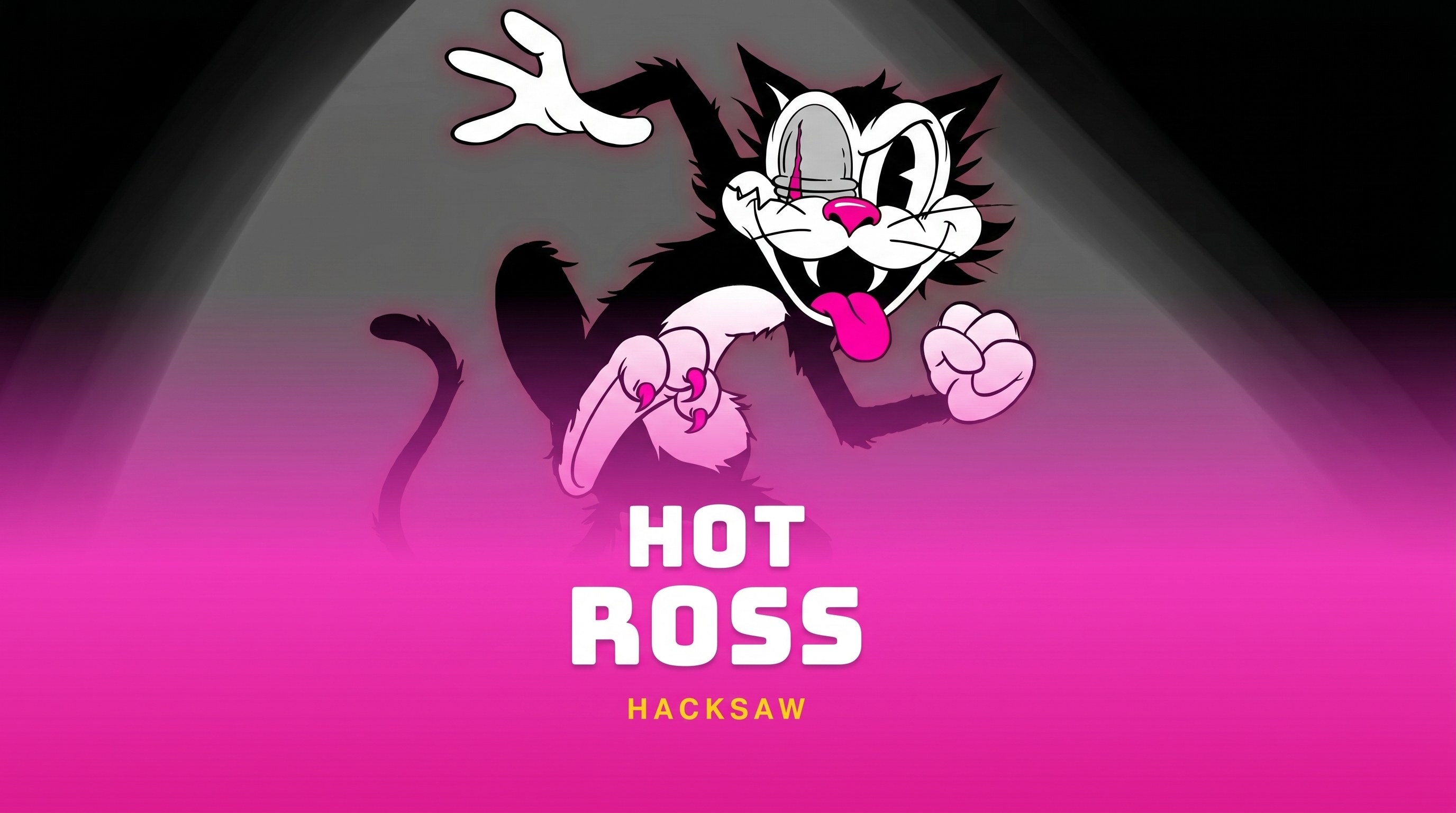
Hot Ross: Hacksaw Puts the One-Eyed Cat Back in Charge of Expanding Wild Chaos
Hacksaw’s cartoon alley soap opera started when Ross and Maxx were still sharing oxygen in RIP City. Hot Ross is the chapter where the cat finally headlines — same noir graffiti energy, but the grid is a tight 5×5 with 19 fixed paylines and two special wild brands, RO$$ and HOT RO$$, that expand, chain, and occasionally drag multipliers through ordinary bomb wilds like they owe him money.
If you liked the push-pull in RIP City but want more reel coverage and fewer excuses, this is Ross uncut. Pair sessions mentally with Chaos Crew if you need a reminder of how Hacksaw likes to paint brutality with crayons — different mechanic family, same “do not autopilot your stake” lecture.
The stats on the game read 96.3% RTP, a 3.68% house edge, and volatility of 3/5 — still capable of streaks, especially once HOT RO$$ starts yanking neighbours into full-reel wild columns. Marketing still talks about a 15,000x class ceiling; confirm the printed cap in help. Operator RTP ladders and FeatureSpins menus can quote alternate numbers beside that default line.
RO$$ vs HOT RO$$ — expansion grammar matters
Normal RO$$ lands somewhere on its reel and, when it participates in a win as designed, expands downward to the bottom row, turning every touched position wild. HOT RO$$ is the show-off: it slides to the top first, then covers the entire reel, and — critically — can force RO$$ symbols on the immediate left and right reels to teleport up and expand full height too. That adjacency rule is how one icon becomes three painted columns in a heartbeat.
Both expanding brands can pick up multipliers when their expansion path crosses a regular wild. Values in published material run from small integers up through 200x, and multiple wilds along the path add before applying to the expanded mass. When several expanded columns participate in the same line win, multipliers add again before paying — the paytable spells the exact order; do not guess from chat logs.
Scatter FS symbols cannot land under expanded Ross tiles on some builds — a small rule that matters when you are counting “how many scatters are actually possible this spin.” It is exactly the kind of footnote Hacksaw loves: simple on the surface, picky in the PDF.
Three FS modes — Cat Calls, Nine Lives, Bigg Boss Ross
Three FS scatters start Cat Calls — ten free spins with better RO$$ / HOT RO$$ density than the floor game. Four scatters unlock Nine Lives, adding persistence: once a special Ross symbol hits a reel, that reel activates and guarantees another RO$$ / HOT RO$$ arrival on every later spin — the board slowly turns into a cat condo of locked behaviour. Five scatters fire Bigg Boss Ross, the marketing “hidden epic”: still ten spins, but every round ships at least two HOT RO$$ symbols and a regular wild, so the chain reaction is less theoretical and more mandatory.
Two or three scatters inside the bonus usually add +2 or +4 spins depending on the build — verify in-client. FeatureSpins and bonus buys range from cheap bonus-hunt tickets up to eye-watering 1,000x entries; each tier may print its own RTP. Compare those stamps to the 96.3% / 3.68% headline on the default game before you click.
Who should adopt this cat
Hot Ross is for players who want readable paylines but Hacksaw-grade theatrics — expanding characters, multiplier wilds, and bonuses that stack behaviour instead of reinventing math every spin. It is a weak match for anyone chasing cluster pays or a chill 2/5 grind — even with 3/5 on the meter, Ross can still take hostages.
Size bets for variance, not for ego; respect FeatureSpin RTP stamps; and when HOT RO$$ paints three reels and the bombs line up, enjoy the chaos — Hot Ross is exactly the headline act Hacksaw promised.
Bet ranges in published material typically sit around €0.10 to €50 per spin — comfortable for micro testing, tight for whales — which matches Hacksaw’s habit of keeping character games accessible while still letting buys go absurd. Symbol art leans street-cat props — fish bones, spray cans, dice — so premium lines still feel thematic even when the real story is wild coverage. If you arrive from Wanted Dead or a Wild, remember Ross is line-based: fewer “screen full of multipliers” miracles, more “did all nineteen lines just intersect three expanded wild columns” miracles.
When you review a session, separate base-game expansions from bonus persistence: Nine Lives’ activated reels are a different risk curve than Cat Calls’ “more symbols” approach, and Bigg Boss Ross is basically the slot saying “hold my milk.” Pick the mode your temperament can survive, then let Ross do what Ross does — cause problems, beautifully, at 96.3% RTP and 3.68% house edge on the stats we show for this build.
Related Posts
Six New MonkeyTilt Picks: Pragmatic Farm Wheels and Anubis Tumbles, AvatarUX Mining, Hacksaw Duels, Nolimit Island Chaos, and Wicked Expanding Cred
Pragmatic farm wheels and Anubis tumble multipliers, AvatarUX roaming wilds, Hacksaw duel horror, Nolimit island xWays, and Wicked expanding spins — six fresh lobby picks …

MonkeyTilt Bonanza 1000: Pragmatic’s Candy Bomb Built for the Tilt Mafia
House-exclusive fruit, tumble clears, multiplier bombs stacking to the moon—MonkeyTilt Bonanza 1000 is Sweet Bonanza energy with Tilt branding.
Midas Fortune: PG Soft Paints Clusters Gold Until Wilds Won’t Leave
Touch the cluster, watch gold crawl, pray the wild graduates before the cascade goes cold. Midas Fortune is a 5×5 jewelry box where the bonus …
Le Fisherman: Smokey the Raccoon Takes Golden Squares to the Dock
Fishing with a raccoon sounds wholesome until Golden Squares start hoarding rainbows and buckets drain the whole dock. Calm 2/5 bolts on the card, 15,000× …